
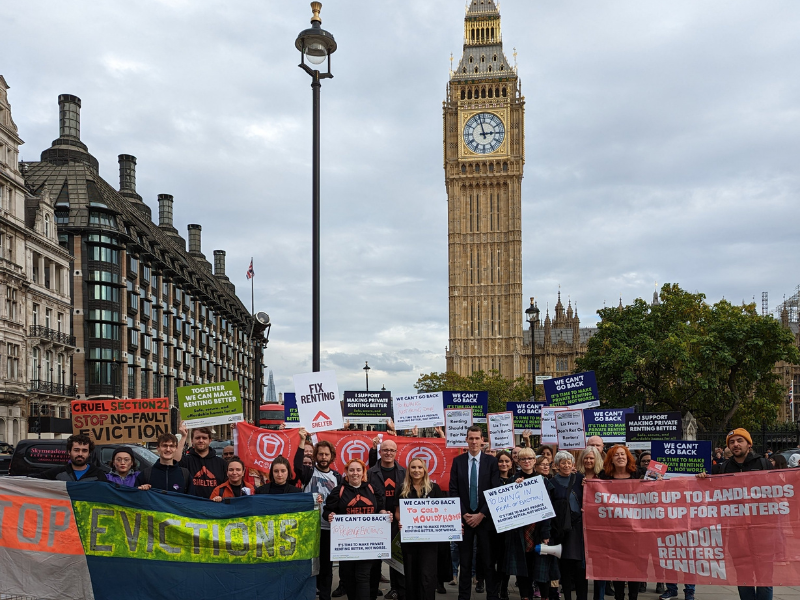
In this blog, SMK’s Head of Programmes Alex Jones and Associate James Noble introduce some of the key findings from their evaluation case study report on how the Renters’ Rights Act was won and what a decade of campaigning can teach us about winning policy change.
When change feels impossible
When Generation Rent first called for the abolition of Section 21 in 2014, the idea was widely dismissed. Just over a decade later, on 1 May 2026, the Renters’ Rights Act came into force, ending ‘no-fault’ evictions and strengthening rights for millions of renters. It’s the most significant reform of private renting in a generation. But how did this change actually happen?
Learning from campaigning success
Major social change rarely happens quickly, or for one reason. It’s the result of sustained effort, multiple strategies and many actors working together over time. Yet there are few published campaign evaluations that explain how change really happens.
At SMK, we worked with Shelter to evaluate their contribution to the Renters’ Rights Act. Alongside that work, we’ve produced a public case study to capture the key lessons for campaigners, charities and funders interested in advocacy, influencing and policy change.
Download the case study: The Renters Rights Campaign here.
What made the difference?
The campaign to end ‘no-fault’ evictions wasn’t driven by a single organisation or tactic. It was a whole-system effort over more than a decade, led by a broad coalition of organisations, renters and campaigners. While our evaluation focuses on Shelter’s role, it’s clear that the Renters Reform Coalition created the alignment and shared direction needed to influence government and shape legislation. The most important drivers of change were:
- A strong, unified coalition able to align around shared goals
- Long-term narrative change that made renting a mainstream political issue
- Policy expertise that shaped the detail of the final Act
- Sustained political influencing, from local organising to parliamentary engagement
- Mobilisation of renters and supporters, making the case visible and urgent
- Strategic decisions and calculated risks; including walking away from a weakened Bill
Mapping how change happens
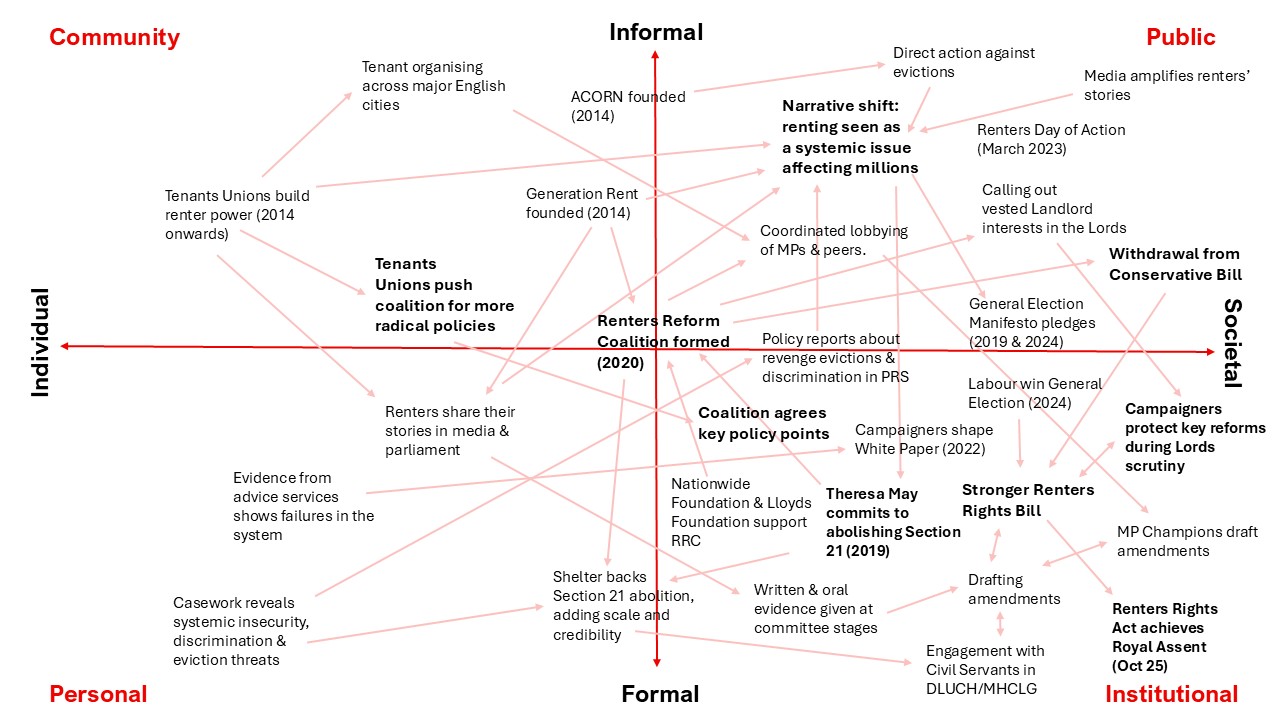
To understand how these elements came together, we mapped the campaign using SMK’s Social Change Grid (a practical tool for understanding and planning campaigning strategy). The grid shows how change happens across four areas:
- Personal (casework, lived experience)
- Community (organising and grassroots action)
- Public (media, narrative and campaigning)
- Institutional (policy, politics and legislation)
The Renters’ Rights campaign shows that lasting policy change rarely happens in just one place. The final Act was delivered in Parliament, but it was built on years of activity across each of the four quadrants.
Why this matters
This case study provides a rare, evidence-based look at how campaigning and influencing work can deliver real policy change. It shows that success depends on:
- Sustained effort over time
- Alignment across different strategies
- Being ready when political opportunities emerge
Download the full case study to explore the campaign in more detail and learn how these lessons could apply to your work.
If you’re looking to evaluate a campaign or strengthen your approach to advocacy and social change, get in touch, we’d love to support you.