
Last week, I joined the webinar launch for Rosa, the first and only UK-wide funder with a mission to invest in women-led organisations that champion and support women and girls, new report celebrating ten years of its Voices from the Frontline fund. I left feeling inspired, hopeful, and reminded of a simple truth: when women and girls are given the resources to campaign on the issues affecting their lives, change happens.
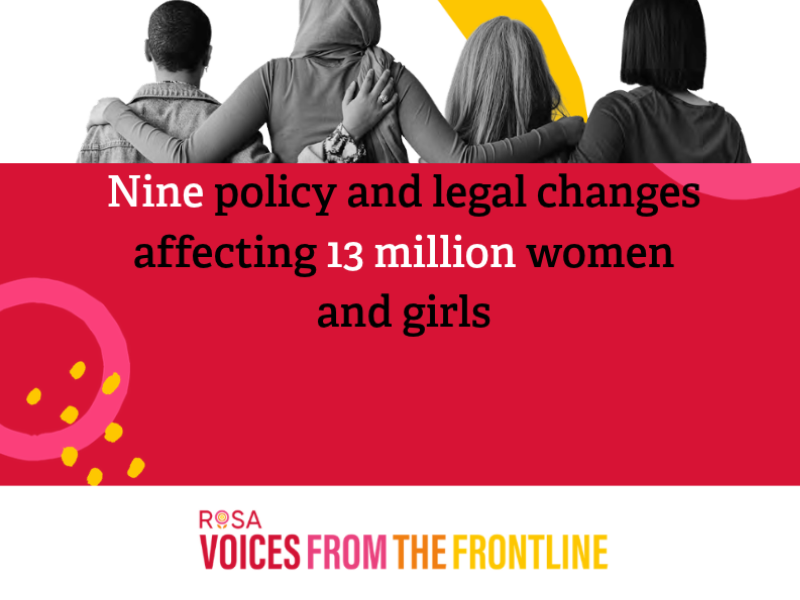
The report brings together a decade of learning between 2015 and 2025, which saw the fund award 151 grants to 132 organisations. The impact has been huge and includes contributing to nine significant law and policy changes that have affected an estimated 13 million women and girls.
Those changes include new flexible working rights, the decriminalisation of abortion in Northern Ireland, a ban on virginity testing, and the recognition of economic abuse within government strategies.
Yet one of the strongest messages is that policy wins are only part of the story.
As researcher and report author Naami Padi explained, many of the most important outcomes of campaigning are often less visible. Campaigns help people understand issues differently. They give language to lived experiences. They build confidence and create opportunities for people to speak for themselves. They shift culture, communities and conversations.
A campaign win is not a finishing line but a milestone.
We heard this powerfully illustrated through the experiences of two organisations funded by Rosa.
Chyloe Powell from BelEve shared the story of the It Is That Deep campaign, which emerged after girls and young women repeatedly spoke about experiencing sexual harassment and seeing it dismissed as “banter” or being told that “it’s not that deep”. Through mentoring, focus groups and listening sessions, BelEve created space for girls to share their experiences and shape solutions. Rosa’s funding helped train 120 young ambassadors and reach hundreds more young people. Crucially, those young women were not treated as beneficiaries; they became advocates for change.
The girls themselves challenged BelEve to involve boys in the conversation. If attitudes were going to change, they argued, both boys and girls needed to be part of the solution. It’s a powerful example of what happens when organisations trust those closest to the issue to lead.
Natasha Rattu from Karma Nirvana shared a similar lesson from the charity’s successful campaign to secure a statutory definition of honour-based abuse in UK law. The campaign centred survivors from the outset, bringing people together to create a shared understanding of the change needed. As Natasha put it, survivors were not simply storytellers; they were advocates and experts. Listen to Natasha in this session here.
Both speakers returned to a common theme: lived experience is expertise.
The people closest to a problem are often best placed to understand it, identify solutions and drive change. Yet women and girls’ organisations continue to receive a tiny proportion of charitable funding. Rosa highlighted that less than 2% of funding goes to women and girls’ organisations, despite the vital role they play in advancing social change.
The discussion also offered important lessons for funders.
Campaigning is rarely linear. Progress can stall, opportunities can emerge unexpectedly, and the route to change often looks different from what was first envisioned. Effective funding recognises this reality. It trusts organisations closest to the issue, invests in grassroots leadership, values lived experience, and understands that relationship-building, community organising and culture change are all meaningful outcomes in their own right.
At SMK, these lessons resonate deeply with our own experience. Over the past four years, we’ve worked alongside Rosa to support Voices from the Frontline grantees to strengthen their campaigning skills, confidence and networks. We’ve seen firsthand the creativity, determination and expertise that grassroots campaigners bring to the challenges facing their communities. We are so thrilled to have had some part in supporting all these brilliant campaigns and changemakers.
The stories shared were a reminder that lasting change doesn’t happen by accident. It happens because people organise, campaign, speak up and refuse to accept the status quo.
And more often than not, those changes have been fought for and won by the campaigning of women and girls.
The report reminds us that when women and girls have the resources, confidence and support to campaign, they don’t just change policies. They change conversations, shift power and help build a more equal future for us all.
Download Rosa’s report here and learn more about the next round of Voices from the Frontline fund, closing date Monday 16th November.
If you want to hear more about how we’ve supported ROSA through training and convening campaigners, and how we can support your campaigning work please get in touch.