
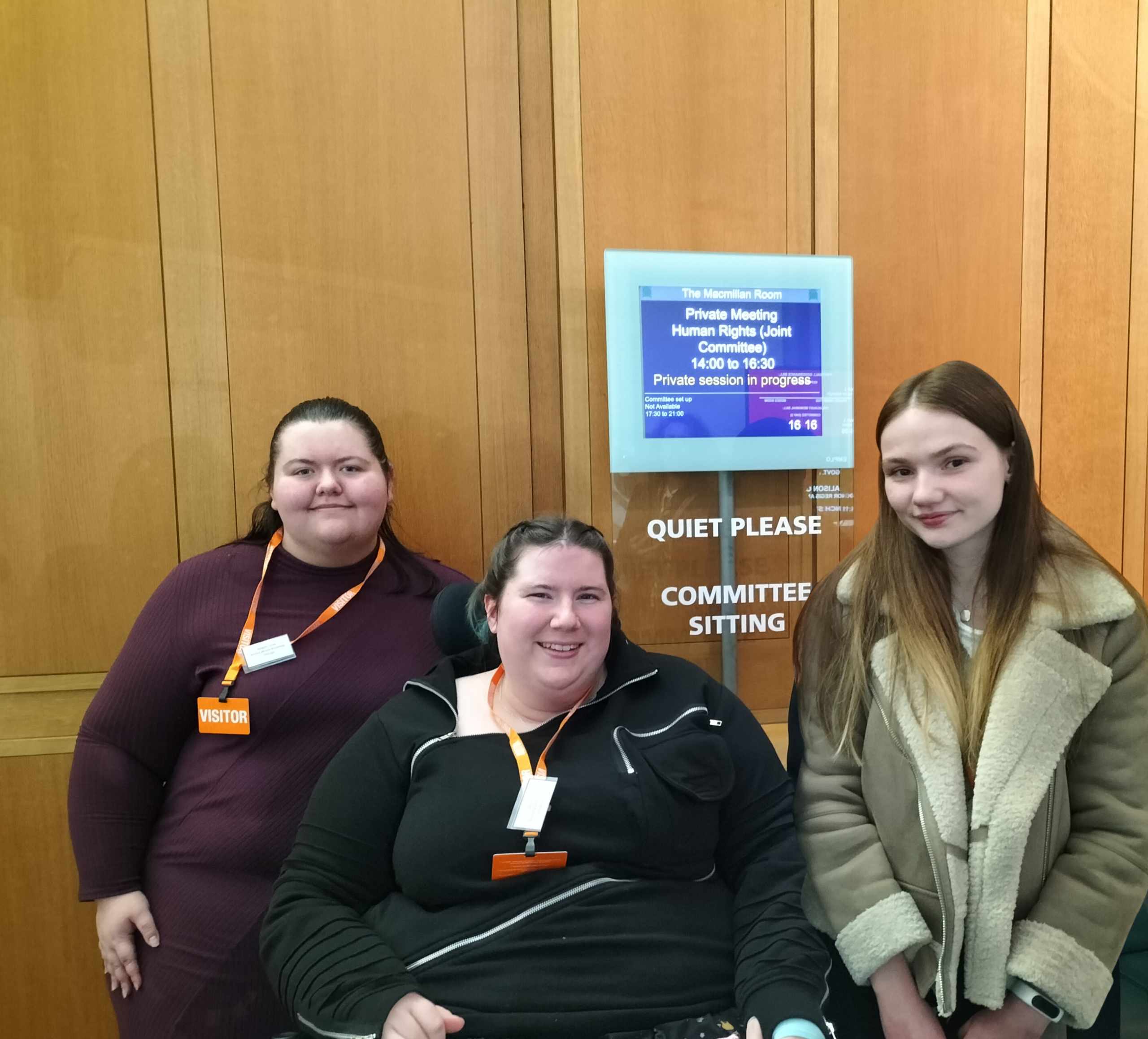
Three Blooming Change members at the Houses of Parliament, attending the Joint Committee on Human Rights roundtable. (March 2025. Credit: Blooming Change.)
Blooming Change worked together to ensure that the views and experiences of children and young people were placed at the heart of reforming the Mental Health Act of 1983.
The Campaign
Blooming Change, a group set up by children’s rights charity Article 39, brings together nine young people who want mental health inpatient units, and the laws and rules they follow, to improve for all children and young people. They want them to be safe, respectful and humane settings. Since 2023, Blooming Change has focused on the Mental Health Bill, working to ensure that the views and experiences of children and young people are placed at the heart of reforming the Mental Health Act of 1983. Their campaign is rooted in the group’s knowledge and expertise. They studied the Bill in depth, met regularly to agree priority reforms, and developed clear proposals grounded in experience. Throughout the Bill’s progress, Blooming Change shared their insights with parliamentarians and civil servants, sending briefings to Peers and MPs, securing a lengthy meeting with the Mental Health Bill team in Westminster, and contributing to a Joint Committee on Human Rights roundtable in Parliament on the Bill’s impact on children’s rights.

Credit: Blooming Change.
It’s such an honour to have been shortlisted for this award for all of the work we put into the fight to ensure the rights of children and young people in mental health inpatient units. The opportunity to develop the skills we have used in the project will enable us to continue to fight in amplifying voices of other young people.”
Danika
Member, Blooming Change
The Change
The major achievement of Blooming Change was the passing of their debriefing amendment, Clause 35, in the House of Lords. The amendment required independent advocates to contact former patients within 30 days of discharge offering them the chance to reflect on their inpatient experience, and for hospitals to publish annual reports on this feedback. It was designed to place patient voice firmly within the legal framework of mental health inpatient units, giving future patients a formal and protected opportunity to speak about their treatment, support healing, and drive accountability and improvement across the system.
Blooming Change built a strong relationship with Lord Howe, who tabled their amendments and drew heavily on their briefings during House of Lords debates. In these debates alone, Blooming Change was mentioned 18 times by multiple Peers! Their amendment passed with a strong majority (209–143), one of only four amendments agreed in the Lords and the only one rooted in children and young people’s experiences.
Their evidence also shaped the Joint Committee on Human Rights’ final report, which echoed multiple Blooming Change priorities including restrictions on placing children on adult wards, and urged the Government to support retaining Clause 35.
Although Clause 35 was later removed in the House of Commons, it remains a major milestone in amplifying children and young people’s voices, and significantly raised national awareness of the harms faced in mental health inpatient units.
The Future
With the removal of Clause 35 from the Mental Health Bill, Blooming Change have now reached out to civil servants to see how their experience and knowledge might support the reform of the Mental Health Act Code of Practice instead.
In a parliamentary debate last March, then Health Minister Baroness Merron expressed her commitment to working with Blooming Change to inform revisions to the code of practice and wider policy.
Who else was involved?
Article 39; Blooming Change members; Millie Hall, Head of Children and Young People’s Activism at Article 39; Lord Howe; and the Paul Hamlyn Foundation Youth Fund.

